


For small businesses, being visible when local customers search for products or services online can make a major difference. When someone searches for a service such as “digital marketing agency near me,” “best salon near me,” or “plumber in the US,” Google often displays a map with relevant local businesses before the regular search results.
This is where Google Maps SEO becomes important. Ranking higher on Google Maps can help your business attract more local customers, increase calls and website visits, generate directions, and build trust with potential customers. However, getting into the top local results requires more than simply creating a Google Business Profile.
What Is Google Maps SEO?
Google Maps SEO is the process of optimizing your business's online presence to improve its visibility in Google Maps and Google's local search results. The foundation of Google Maps SEO is your Google Business Profile (GBP). This profile contains important information about your business, including your business name, address, phone number, website, category, services, photos, reviews, business hours, and other details.
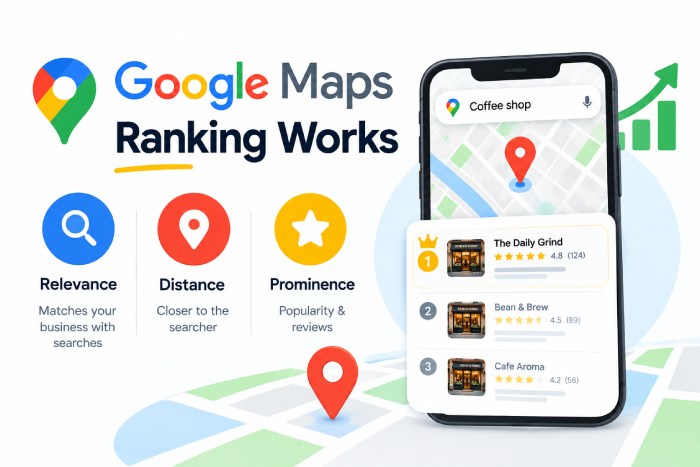
Google generally considers three major factors when determining local rankings:
- Relevance: How closely your business matches what the user is searching for.
- Distance: How close your business is to the searcher's location or the location specified in the search.
- Prominence: How well-known and trusted your business is based on factors such as reviews, links, mentions, and overall online presence.
Because of this, Google Maps SEO is not about using one particular trick. It is about building a strong and consistent local presence across your Google Business Profile, website, directories, review platforms, and other relevant online sources.
Why Google Maps Rankings Matter for Small Businesses
Local customers often search for businesses when they are ready to take action. For example, someone searching for “dentist near me”, “digital marketing agency in us”, or “best restaurant near me” may already be interested in making a purchase or booking a service.
Appearing prominently on Google Maps puts your business in front of these potential customers at the right moment.
Get More Local Visibility - A higher Google Maps ranking means more people can discover your business when searching for products or services in your area.
Generate More Calls and Enquiries - Your Google Business Profile can make it easy for potential customers to call your business, visit your website, ask for directions, or send an enquiry.
Build Trust Through Reviews - Customers naturally look at reviews before choosing a local business. A well-optimized profile with genuine positive reviews can make your business appear more trustworthy.
Drive More Website Traffic - Your Google Business Profile can send interested users directly to your website, where they can learn more about your services and contact your business.
Compete With Larger Businesses - Local SEO gives small and growing businesses an opportunity to compete for visibility based on local relevance and reputation rather than relying only on large advertising budgets.
How Google Maps Ranking Works
Understanding how local rankings work is important before implementing a Google Maps SEO strategy. Google considers different signals when deciding which local businesses to show for a particular search. While Google's exact ranking systems are not publicly disclosed in full, three key concepts are especially important: relevance, distance, and prominence.
Relevance - Relevance refers to how well your business matches the search query. For example, if someone searches for “SEO agency,” Google is more likely to show businesses that clearly offer SEO services rather than businesses from unrelated industries.
This is why selecting the correct business category, clearly describing your services, and maintaining accurate business information are important.
Distance - Distance refers to how close your business is to the person searching or to the location included in the search.
For example, a person searching for “coffee shop near me” may see different results depending on where they are located.
You cannot control where a customer searches from, but you can ensure that your business address and service-area information are accurate.
Prominence - Prominence is related to how established and well-known a business appears to be online and offline.
Factors that may contribute to prominence include:
- Quality and quantity of customer reviews
- Links from other websites
- Local citations and business mentions
- Website authority
- Online reputation
- Overall visibility across the web
This means Google Maps SEO should be treated as part of your overall local SEO strategy, not as a standalone activity.
Local SEO Checklist to Rank Higher on Google Maps
Now that you understand the basics, let's look at the most important steps you can take to improve your local search visibility.
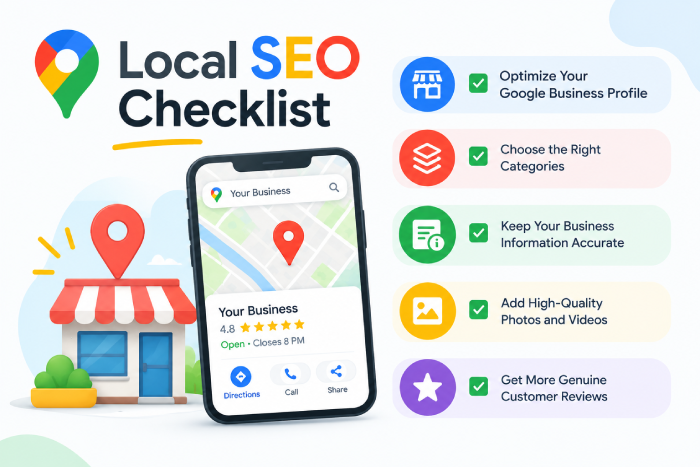
1. Optimize Your Google Business Profile
Your Google Business Profile is one of the most important assets for local SEO. Make sure your profile is complete and contains accurate information about your business.
Pay attention to:
- Business name
- Business category
- Address
- Phone number
- Website
- Business hours
- Services
- Business description
- Photos
- Videos
- Attributes
- Products, where relevant
Avoid adding unnecessary keywords to your business name. Your business name should accurately represent your real-world business. A complete and accurate profile gives Google and potential customers a clearer understanding of what your business offers.
2. Choose the Right Primary and Secondary Categories
Business categories help Google understand what your business does. Your primary category should represent the main service or business activity you want to be known for. You can also select relevant secondary categories where appropriate.
For example, a digital marketing agency may have relevant categories related to its actual services and business type. Do not select unrelated categories simply because you think they may generate more searches. Relevance is more important than adding as many categories as possible.
3. Keep Your Business Information Accurate
Consistency is essential for local SEO.
Make sure your business information is accurate across your:
- Google Business Profile
- Website
- Local directories
- Social media profiles
- Industry directories
- Review platforms
Your business name, address, phone number, and website should be consistent wherever they appear. If your business moves to a new location, changes its phone number, or updates its opening hours, make sure these changes are reflected across important online platforms.
4. Add High-Quality Photos and Videos
Visual content can make your Google Business Profile more attractive to potential customers. Add genuine, high-quality photos that represent your actual business.
Depending on your industry, you can include:
- Exterior photos
- Interior photos
- Team photos
- Products
- Services
- Projects
- Before-and-after images
- Work processes
- Videos
Avoid relying on generic stock photos when real images of your business are available. Fresh and relevant visual content can also help customers understand what they can expect when they choose your business.
5. Get More Genuine Customer Reviews
Reviews are an important part of local search and customer decision-making. Encourage satisfied customers to leave honest reviews about their experience. The goal should not simply be to collect a large number of reviews. You should focus on building a consistent flow of genuine customer feedback.
You can make the process easier by providing customers with a direct link to your Google review page after completing a purchase or service. Never buy fake reviews or create reviews yourself. Artificial reviews can damage your reputation and may violate platform policies.
6. Improve Your Website for Local SEO
Your website and Google Business Profile should support each other.
Make sure your website clearly communicates:
- What your business does
- Where you operate
- Which services you provide
- How customers can contact you
Your website should also be mobile-friendly, fast, secure, easy to navigate, and technically optimized for search engines.
If you serve specific cities or areas, create useful location pages where they genuinely provide value to users.
For example, a digital marketing agency serving multiple cities may create dedicated pages explaining its services and experience in those locations. Avoid creating dozens of nearly identical location pages just to target different keywords. Each page should offer unique and useful information.
7. Create Location-Based Content
Creating useful local content can help your website become more relevant to the areas you serve.
Some content ideas include:
- Local industry guides
- City-specific service guides
- Local business marketing tips
- Case studies
- Local market trends
- Area-specific FAQs
- Guides to choosing a service provider
For example, instead of publishing a generic article about SEO, a digital marketing agency could create content around topics such as “Local SEO Strategies for Small Businesses in US.” The key is to create content that genuinely helps people in your target location.
8. Build Local Backlinks
Backlinks are links from other websites to your website. For local SEO, links from relevant and trustworthy local websites can be particularly valuable.
You can build local links through:
- Local business associations
- Industry organizations
- Local news websites
- Community websites
- Local sponsorships
- Business partnerships
- Relevant guest contributions
- Local events
Do not focus on buying large numbers of low-quality backlinks. A smaller number of relevant, trustworthy links can be more valuable than hundreds of spammy links.
9. Keep Your Google Business Profile Active
Local SEO is not a one-time task. Regularly review your Google Business Profile and keep important information updated.
Depending on your business, you can:
- Add new photos
- Update business information
- Add or update services
- Publish relevant posts
- Respond to customer reviews
- Answer customer questions
- Keep business hours updated
An active and accurate profile provides a better experience for both Google and your customers.
10. Track Your Local SEO Performance
You cannot improve what you do not measure. Monitor important local SEO metrics to understand whether your strategy is working.
Some useful metrics include:
- Google Business Profile interactions
- Website visits from local searches
- Phone calls
- Direction requests
- Review growth
- Local keyword rankings
- Organic traffic
- Leads and enquiries
Remember that rankings can vary depending on the searcher's location, device, search query, and other factors. Instead of focusing on one ranking position, look at the overall trend in visibility, traffic, engagement, and leads.
Common Google Maps SEO Mistakes to Avoid
Many businesses make simple mistakes that can limit their local visibility. Here are some common ones to avoid:
Keyword Stuffing - Do not force keywords into your business name, description, or content unnaturally. Write for customers first and use relevant keywords naturally.
Using Incorrect Business Information - Incorrect addresses, phone numbers, business hours, or other details can create confusion for both customers and search engines.
Choosing Irrelevant Categories - Do not select categories simply because they have high search volume. Choose categories that accurately describe your business.
Buying Fake Reviews - Fake reviews may provide short-term numbers but can seriously damage your reputation and credibility.
Ignoring Negative Reviews - Ignoring customer complaints can make your business appear unresponsive. Respond professionally and try to resolve genuine issues.
Creating Low-Quality Location Pages - Creating hundreds of almost identical pages for different locations can result in poor user experiences and weak content.
Building Spammy Backlinks - Low-quality backlinks can hurt your website rather than helping it. Focus on relevance, quality, and genuine relationships.
Expecting Immediate Results - Local SEO takes time. Consistent optimization and measurement are more effective than constantly changing your strategy.
How Long Does It Take to Rank on Google Maps?
There is no fixed timeline for ranking on Google Maps. Some businesses may see improvements relatively quickly, while others may take several months to build stronger local visibility.
The timeline can depend on factors such as:
- Competition in your area
- Your industry
- Existing Google Business Profile authority
- Number and quality of reviews
- Website strength
- Local citations
- Backlink profile
- Location
- Overall local SEO competition
If you operate in a highly competitive market, it may take longer to establish strong visibility. The best approach is to focus on consistent improvements rather than looking for a quick shortcut.
Final Thoughts
Ranking higher on Google Maps can be a valuable source of visibility and leads for small businesses.
However, successful Google Maps SEO is not about one single optimization technique. It requires a complete local SEO strategy that combines a well-optimized Google Business Profile, accurate business information, genuine customer reviews, a strong website, local content, relevant citations, and quality backlinks.
The most important thing is consistency.
Keep your business information accurate, provide a great customer experience, encourage genuine reviews, publish useful content, and continue monitoring your local SEO performance. If you are struggling to improve your Google Maps visibility or do not have the time to manage local SEO yourself, working with an experienced digital marketing agency can help you develop a structured strategy based on your business, industry, and target location.
FAQs
How do I rank higher on Google Maps?
To improve your Google Maps ranking, optimize your Google Business Profile, choose relevant categories, maintain accurate business information, collect genuine reviews, respond to customers, build relevant local citations and backlinks, and optimize your website for local SEO.
Is Google Business Profile important for Google Maps SEO?
Yes. Google Business Profile is a central part of local search visibility. A complete, accurate, and well-maintained profile helps Google understand your business and helps potential customers find and evaluate it.
How many reviews do I need to rank on Google Maps?
There is no specific number of reviews that guarantees a particular ranking. Review quality, relevance, authenticity, recency, and the overall strength of your local presence can all matter.
Can I rank on Google Maps without a website?
A business can appear on Google Maps without having a website. However, having a well-optimized website can strengthen your overall online presence and provide additional information for potential customers.
How often should I update my Google Business Profile?
There is no fixed posting schedule that guarantees higher rankings. However, you should keep your business information, hours, services, photos, and other relevant details accurate and updated whenever something changes.
Is Google Maps SEO different from regular SEO?
Google Maps SEO focuses primarily on improving visibility in local search and Google Maps, while traditional SEO generally focuses on organic search results. The two strategies overlap in areas such as website optimization, content, links, and technical SEO.